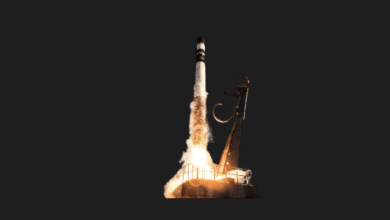

I’ve spent a lot of time tracking how AI models are getting smaller, faster, and smarter, but I never thought I’d be writing about one literally leaving the planet. Alibaba Cloud just pulled off something that sounds like it’s straight out of a high-budget sci-fi flick: their Qwen-3 model has become the world’s first general-purpose AI to be deployed and operated entirely in orbit.
When I first saw the technical specs, I had to do a double-take. We aren’t just talking about a satellite sending data back to a server on Earth. We are talking about the AI living in the stars, processing thoughts in the vacuum of space, and sending results back in record time.
Why the High Ground Matters
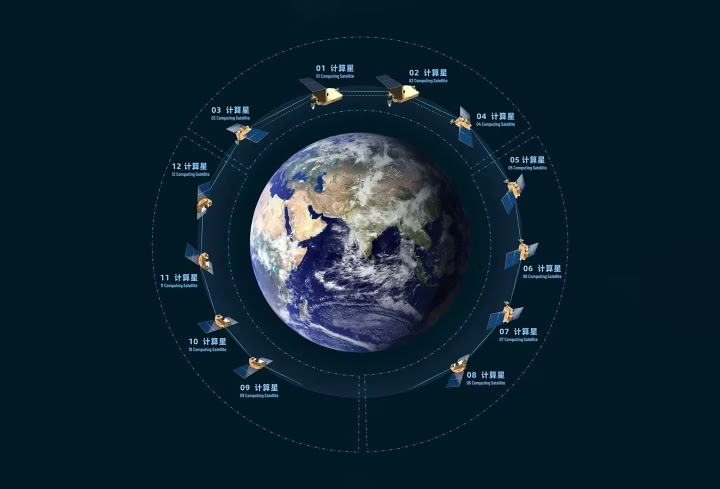
You might be wondering, “Ugu, why do we need AI in space when we have perfectly good data centers here?” It’s a fair question. But when I looked deeper into the Star-Compute Project by Adaspace (the partner in this mission), the benefits started to click:
- Infinite Energy: Solar power isn’t just an alternative in space; it’s the primary, unlimited fuel source. No more massive electricity bills for cooling and running racks.
- Natural Cooling: Forget expensive liquid cooling systems. The ambient temperature of space handles the heat dissipation of high-performance chips much more efficiently.
- Latency Transformation: By processing data where it’s gathered (on the satellite), we bypass the massive “data traffic jams” involved in sending raw imagery or sensor data back to Earth for analysis.
Two Minutes to Greatness

The most impressive part of this test? The speed. Alibaba’s VP, Wang Yabo, confirmed that the entire cycle—sending a query from Earth, the AI performing the “inference” (the thinking bit) in orbit, and beaming the answer back—took less than two minutes.
This wasn’t a pre-loaded script. Qwen-3 was integrated into a constellation of 12 satellites that form the world’s first AI computing satellite team. Seeing Qwen-3 outperform Meta’s Llama community in open-source adoption was one thing, but seeing it literally orbit the Earth is a whole new level of “market dominance.”
The 2035 Vision: A Galaxy of Intelligence

This isn’t just a one-off experiment. Adaspace is planning to launch its second and third computing centers by 2026. Their ultimate goal is to have 2,800 satellites up there by 2035.


Imagine a web of 2,400 inference satellites and 400 training units surrounding our planet. It’s essentially a planetary brain. I personally find this both exhilarating and a little bit humbling. We are moving from “Mobile First” to “AI First,” and now, apparently, to “Space First.”
My Take: The End of Grounded Limitations?

I’ve always felt that the biggest bottleneck for AI was the physical limit of our power grids and the environmental impact of massive data centers. By moving the “thinking” to orbit, Alibaba isn’t just winning a tech race; they are showing us a sustainable way to scale intelligence.
However, it does make me wonder about the geopolitical side. If the “brain” of the world’s most powerful AI is floating 500km above us, who really controls the flow of information? It’s a wild new frontier, and I’m here for every second of it.
What do you think? Would you trust an AI more—or less—knowing its “brain” is physically floating in space rather than sitting in a building on the ground?
You Might Also Like;